HCI & Interfaces · Health & Learning
Jam Tabs
Investigating alternative, color-based music notation and tools for novice improvisation.
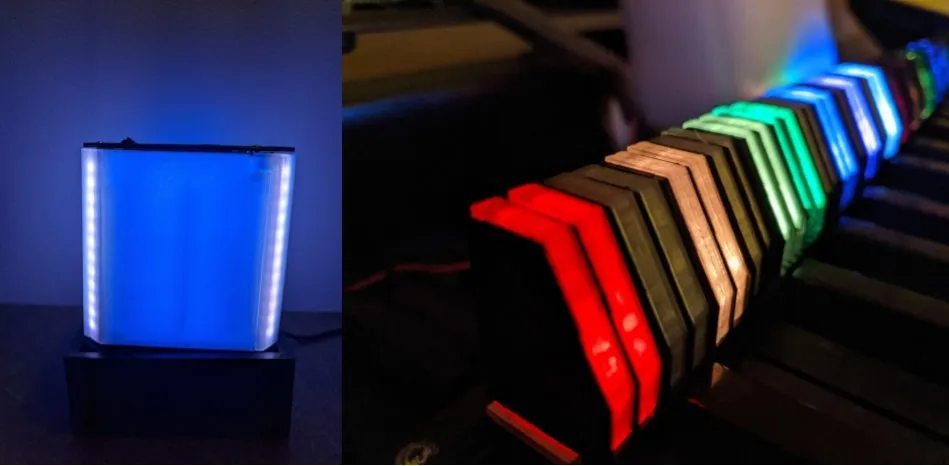
Jam Tabs is a color-based notation for novice improvisers. LED cubes show the chord progression in color, matched to colored bars on the piano keyboard, so each symbol maps directly onto an action and beginners can join a jam session.
Why improvisation needs a new notation
Improvising musicians usually share a lead sheet, a compact chart of the chord progression. To use one, a player must know what the symbols mean, where those notes are on their instrument, and some musical vocabulary. At 60 BPM with a chord change every bar, a novice pianist would have to find a new note on an unfamiliar keyboard every four seconds. Without prior knowledge, that’s impossible. Jam Tabs aims to give novices exactly the information a jam session needs, and no more.
Design
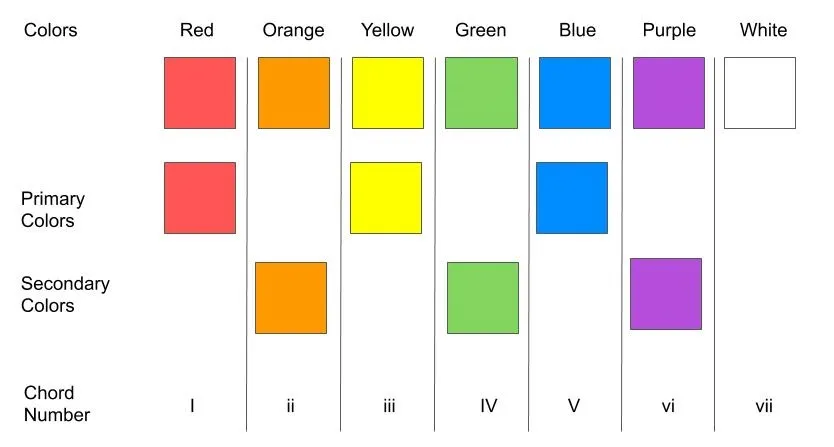
- Seven colors in rainbow order represent the seven chords of a major key, which gives the colors an inherent order.
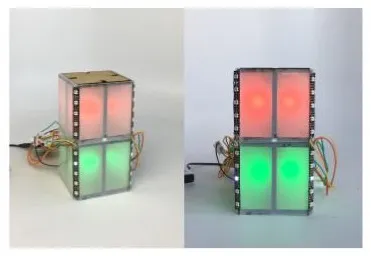
- Each LED cube is one bar of music. A moving light on the cube’s edge counts the beats, showing the time signature.
- Notes outside the key (sharps and flats) are shown by splitting a cube between the two neighboring colors, much like accidentals in standard notation.
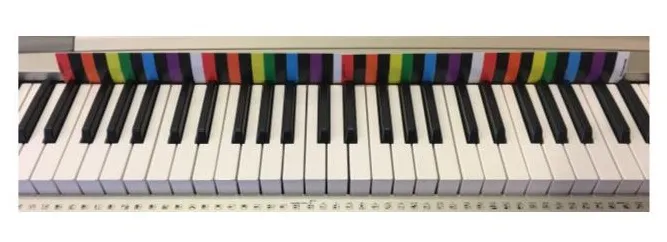
- Vinyl or LED piano bars in the same colors sit behind the keys, so color associations are almost instantaneous and can be moved for key changes.
- The cubes are visible from any angle, so a whole group can follow one shared notation.
Key findings
- Novice pianists followed chord progressions note for note using color, while improvising creatively.
- Players handled keys with many sharps (e.g., E major) as easily as C major.
- The system was used in groups of up to 25 people.
- Jam Tabs grew into an NSF-funded study of notation with Lei Yuan (see Embodied Symbol Systems).
Gallery
Publications
-
Jam Tabs: A Color Based Notation System for Novice Improvisation
International Conference on Technologies for Music Notation and Representation (TENOR), pp. 56–62, 2020.
-
Computer-Supported Music Improvisation
Ph.D. Dissertation, University of Colorado Boulder (ProQuest), Boulder, CO, USA, 2024.
Related projects
How Do We Learn to Read Music?
Using psychological methods and eye-tracking to investigate the effectiveness of several popular approaches to music literacy.
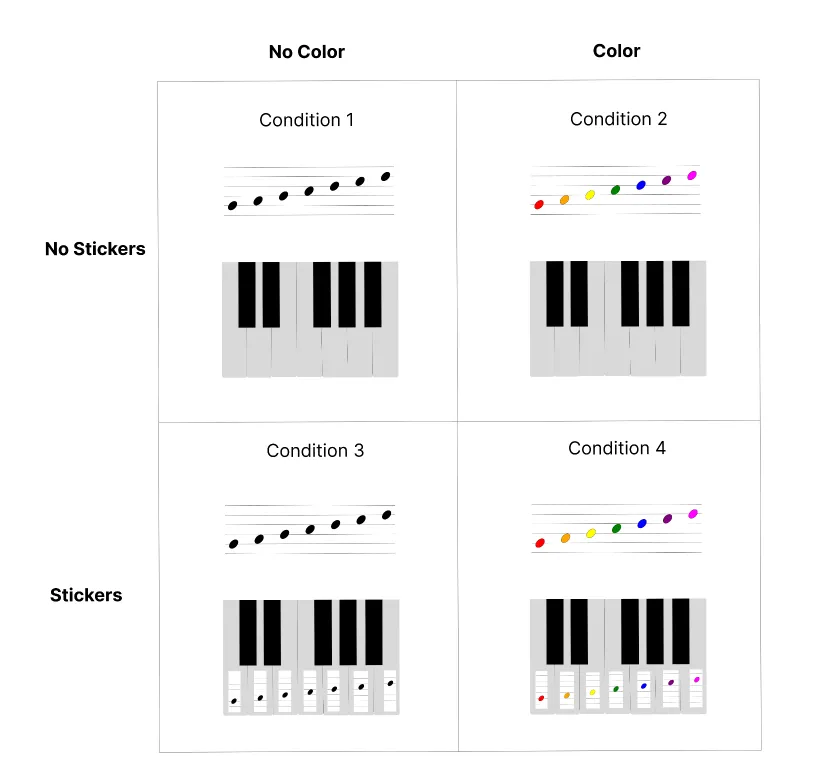
Embodied Symbol Systems
How visual features shape the symbol-perception-action loop in musical notation.
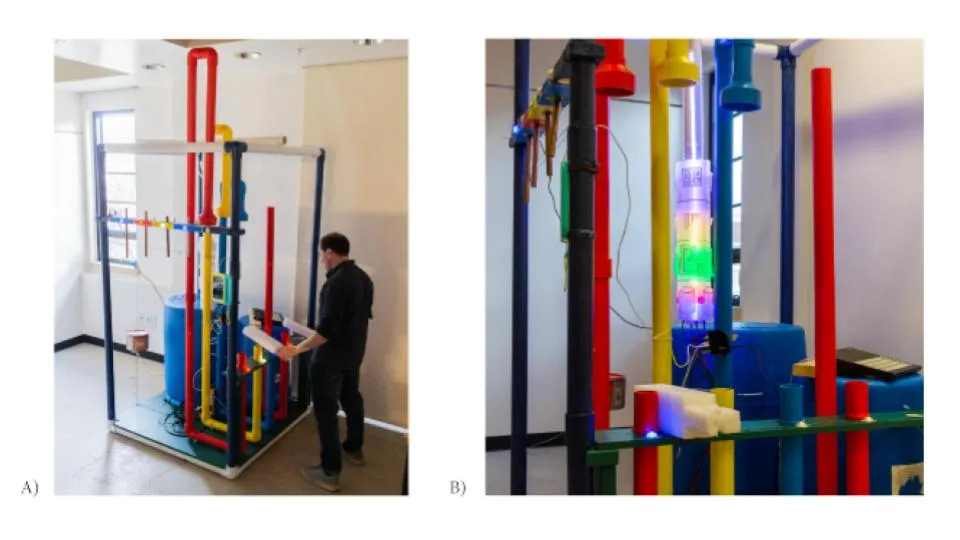
The Jam Station
Algorithmically detecting collaboration in a collaborative musical instrument.